
Plunge Pools
Everything You Need To Know
Over the years the size of Australian backyards has rapidly decreased. This is mainly due to high density areas and larger house sizes. Because of this, homeowners are turning to plunge pools as a solution. They are compact in size and the perfect option for those with limited space but still want the luxury of a pool for their home. Fibreglass plunge pools are one of the most popular options for Perth homes with smaller backyards. Because the shell is factory-made and delivered to site, you can get the “real pool” experience (cooling off, relaxation, entertaining and hydrotherapy-style seating) without sacrificing a huge amount of outdoor space. In this guide we’ll cover plunge pool sizes, installation methods, costs, upgrades, running costs and the key things to consider before you lock in your design.
What is a plunge pool?
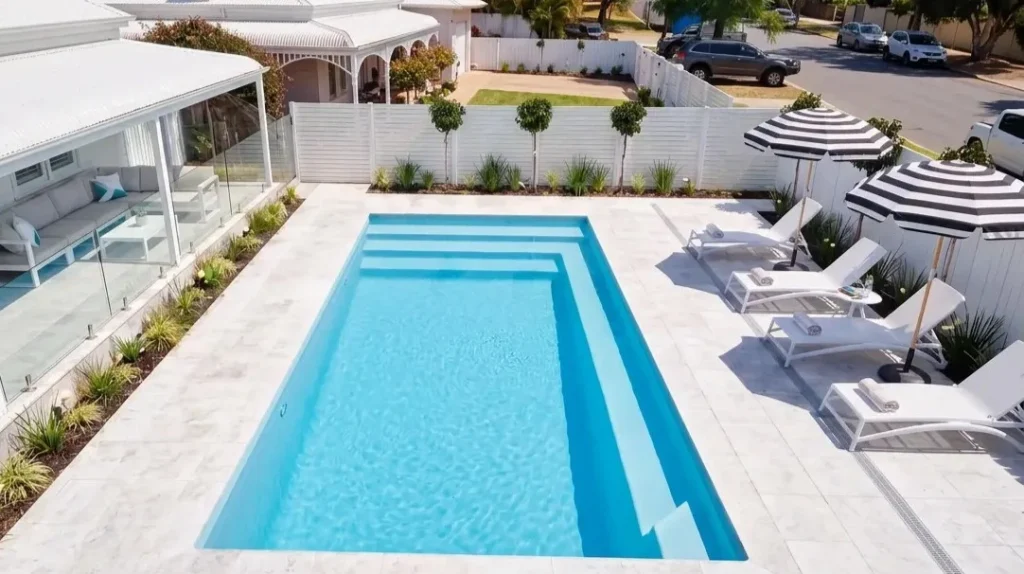
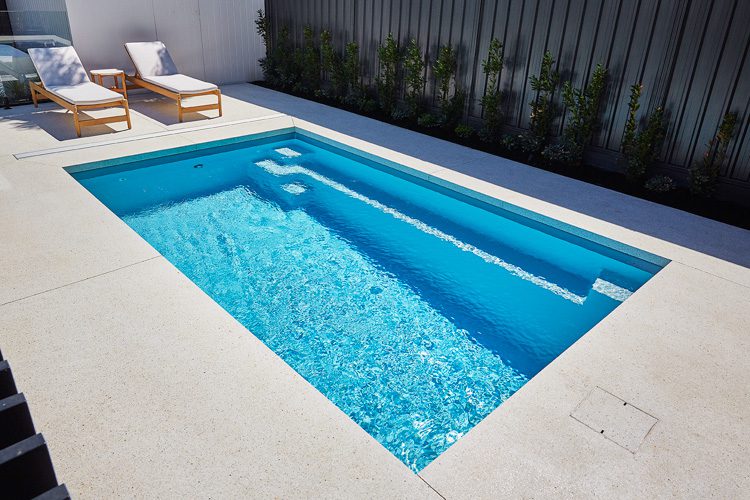
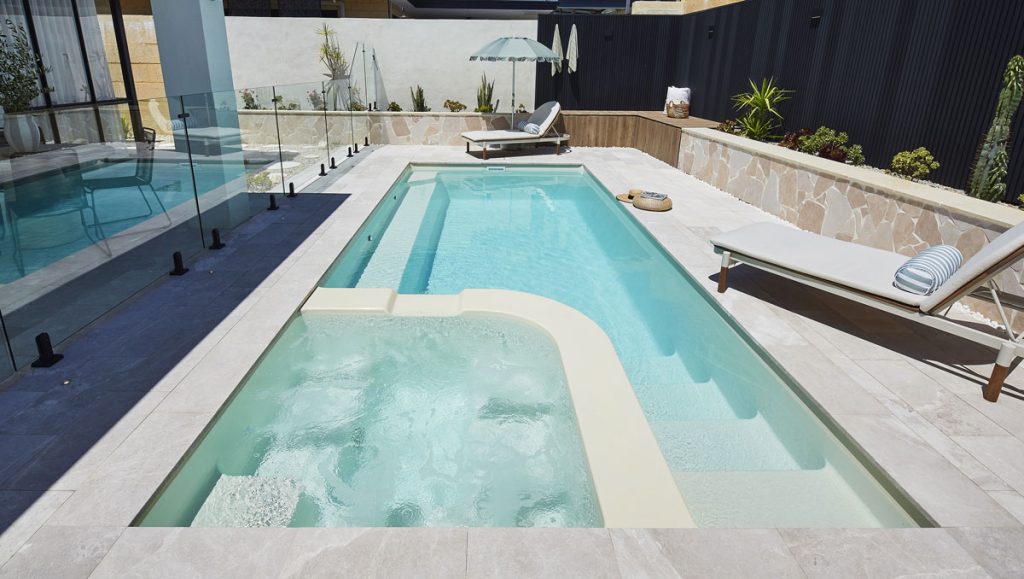
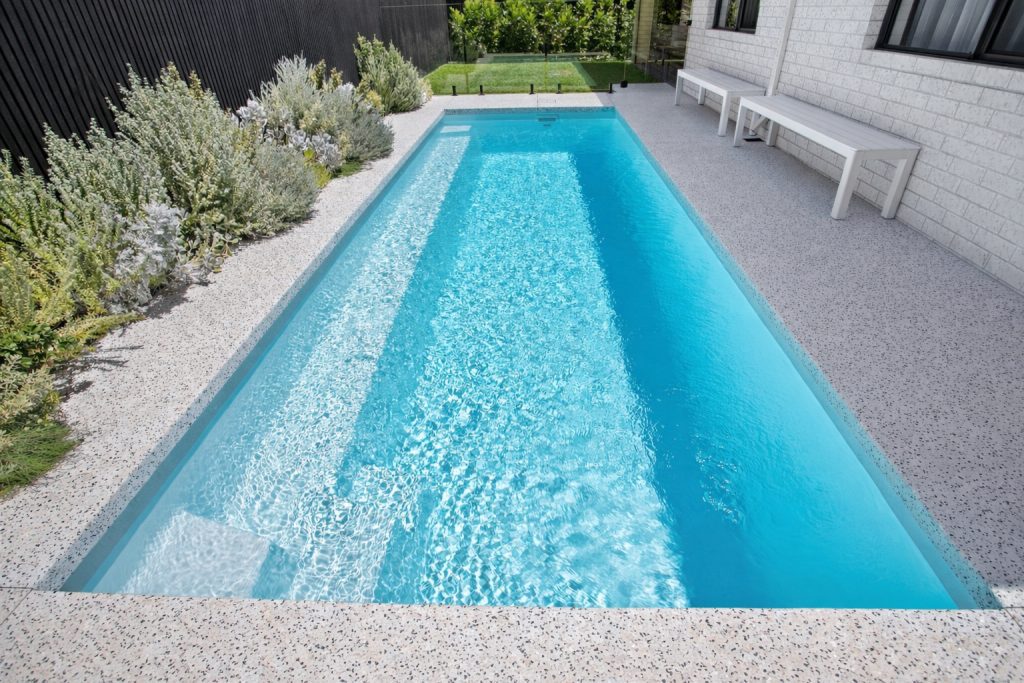
So, what is a plunge pool exactly? A plunge pool is similar to that of a regular sized pool they are just much smaller and have some additional features. They are designed for rest and relaxation purposes rather than swimming. They are normally around 2 to 7 metres long by about 2 to 4 metres wide. Unlike a larger pool, they have a generous seating area that wraps around a large portion of the inside of the pool. This has intentionally been created to provide a comfortable area to relax and unwind.
The depth of a plunge pool can vary depending on which style you select. The middle of the pool is typically much deeper, with the outside of the pool shallower to accommodate the seating. They are great pool option for those who want a pool to rest and relax in and for hydrotherapy purposes. Whilst you can still swim in them, if you wanted to use your pool to entertain plenty of family and friends, a plunge pool may be not be a great option. The come in an array of colours, shapes and designs and are a good choice for those with a small area to work with or people who only want to give up a small area of their backyard for a pool. Looking for a pool for your own backyard? Explore our plunge pool options in Perth, including small fibreglass pool designs suited to smaller outdoor spaces.
Find out exactly what YOUR new pool will cost
Fibreglass plunge pool sizes (and how to choose the right one)
Most plunge pools are designed for relaxing, cooling down and socialising (rather than lap swimming), so the “right size” is usually about comfort, seating and how many people you want in the water at once.
- 2–4 people: Compact plunge pool with wrap-around seating and steps.
- 4–6 people: Mid-sized plunge pool with deeper centre and larger bench zones.
- Families: Look for wider entry steps, a generous ledge/bench, and a layout that makes supervision easy.
Tip: If you want a plunge pool that doubles as a mini exercise pool, ask about resistance jets (they can make a smaller pool feel much more functional).
How is a plunge pool installed?
One of the first things to consider once you have chosen your pool is how you want it to be installed. Fibreglass plunge pools can be installed either above ground, partially above ground or inground. Which installation method you choose depends of your personal preference, the condition of your backyard and your budget.
• Inground pool installations are usually the most popular way to install a pool. This involves excavating the ground to make room for your fibreglass shell to go in, once it is in place it is levelled. Backfill is put around the pool and then compacted.
• If you chose to have your pool installed partially above ground, the installation process is like that of an inground build however only a portion of the ground is excavated to make way for the pool.
• If you decide to have your pool installed above ground. Ensure that you work with your pool builder to come up with a design that makes your above ground pool an attractive statement piece in the backyard rather than just placing it in the yard with nothing around it. This can look drab and detract from the appeal of your backyard.
Choosing to install your pool either partially above ground or above ground does not affect the strength or durability of a high-grade fibreglass pool. They are designed not to bulge under the pressure of water or crack if earth movements occur.
Where a plunge pool works best in the backyard
Because plunge pools are compact, you get more flexibility with placement — but there are still a few practical considerations that can make installation smoother and the pool more enjoyable long-term.
- Sun exposure: More sun usually means warmer water and less heating demand.
- Wind exposure: Wind increases evaporation and heat loss, so sheltered areas can reduce running costs.
- Privacy: Consider screening, fencing design and landscaping early (especially on narrow blocks).
- Access for delivery/installation: Your pool builder will assess access for the shell, excavation and installation equipment.
- Proximity to services: Allow practical access for filtration, plumbing and future maintenance.
If your site is sloping or challenging, fibreglass plunge pools can still be installed in-ground, partially above-ground, or above-ground depending on levels and design goals.
See Our Most Popular Award Winning Pools


Searching For Your Dream Pool?
Running costs and maintenance (what to expect)
Because plunge pools hold less water than a full-size pool, many owners find they use fewer chemicals, heat more efficiently, and are generally easier to keep clean. That said, your running costs still depend on your filtration setup, heating choice and how often the pool is used.
- Filtration: Consistent pump run-time keeps water clear and reduces issues.
- Heating: Smaller water volume usually heats faster, especially with a pool cover/blanket.
- Cleaning: Regular skimming, brushing and basket/filter maintenance keeps water sparkling.
Tip: A pool cover is one of the easiest ways to reduce evaporation, retain heat and keep debris out — which can lower your maintenance load.
Features of a plunge pool
As mentioned, plunge pools are all about relaxation. Here are some of the features that are commonly added to enhance the bathing experience:
A heating system
Yes – a plunge pool can absolutely be heated, and because it’s smaller than a full-size swimming pool, it’s usually cheaper and quicker to warm up. If you’re choosing a plunge pool for relaxation, hydrotherapy or evening dips, a good heating system lets you use it comfortably for more months of the year, not just in the middle of summer.
Before you decide how to heat your plunge pool, it’s worth thinking about a few basics:
- Local climate: Even in warmer parts of WA, nights and winters can still feel chilly in the water. The cooler your climate and the windier your backyard, the more heating power you’ll generally need.
- How often you’ll use the pool: If you plan to use your plunge pool most days, a system that maintains a steady temperature efficiently is ideal. For more occasional use, a “fast-heat” option you can switch on as needed may be better.
- Plunge pool size and depth: Smaller, shallower plunge pools need less energy to heat. Larger or deeper designs may benefit from more powerful or combined systems.
- Budget and running costs: The cheapest system to install is not always the cheapest to run. It’s worth weighing up upfront cost vs. long-term energy bills.
Solar heating for plunge pools
Solar pool heating is a popular choice for plunge pools because it uses free energy from the sun and keeps running costs low. Water from the plunge pool is pumped through a network of tubes or panels on the roof, where it’s warmed by the sun before returning to the pool.
- Best for: Homeowners who want to extend their swimming season while keeping power bills down.
- Pros: Uses renewable energy, relatively low running costs, works well with smaller plunge pool volumes.
- Cons: Heating performance depends on sunshine. On overcast or very cold days, you may not reach your preferred temperature without a backup system.
Electric heaters and heat pumps
Electric heating systems – especially heat pumps – are another common way to heat a plunge pool. A heat pump draws warmth from the surrounding air and transfers it into your pool water, so it can be quite energy-efficient compared with basic electric element heaters.
- Best for: Smaller or medium plunge pools where you want reliable, programmable heating.
- Pros: Can heat your plunge pool in a predictable way, often with built-in thermostats and timers.
- Cons: Higher running costs than solar alone, especially if used heavily through winter.
Gas heating
Gas heaters are the quickest way to bring a plunge pool up to temperature, which is why they’re popular with people who like spontaneous warm-water sessions or have very defined usage times.
- Best for: Occasional but flexible use – for example, heating the plunge pool ahead of a weekend or evening soak.
- Pros: Very fast heating; easy to reach and maintain your ideal temperature on demand.
- Cons: Higher running costs and less environmentally friendly than solar or heat pumps.
Pool covers and blankets
Whatever heating system you choose for your plunge pool, a cover or blanket is almost essential. While they don’t actively heat the water, they trap warmth, reduce evaporative heat loss and help your system work more efficiently.
- Thermal retention: Bubble blankets act like tiny magnifying glasses, letting the sun’s rays in and limiting how quickly the heat escapes.
- Lower running costs: Less heat lost overnight means your heater doesn’t have to work as hard the next day.
- Cleaner water: Covers reduce leaves and debris, which also helps keep your plunge pool easier to maintain.
For families with young children, older adults or anyone using the plunge pool for recovery and hydrotherapy, investing in the right heating system can make the difference between a pool you use a few months a year and a warm, comfortable plunge pool you enjoy in almost every season.
Lighting
Thoughtful lighting can completely change the way a plunge pool feels and functions. It’s not just about seeing where you’re stepping – the right lights make an evening soak feel like you’re in your own private resort.
Why lighting matters in a plunge pool
- Safety: Underwater and perimeter lighting make steps, benches and the shallow edges of the plunge pool easy to see at night, reducing the risk of slips or mis-steps.
- Atmosphere: Warm white lighting feels calm and spa-like, while coloured LEDs can create a fun, vibrant look for parties and family nights.
- Highlighting features: Lights can be positioned to show off water features, tiling, coping and landscaping around the plunge pool.
Popular lighting options for plunge pools
- LED niche lights: Fitted into the pool wall, these provide strong, even illumination and are very energy-efficient. Many systems allow colour-changing modes and dimming.
- LED strip or step lights: Ideal along steps, benches or edges to define the shape of the plunge pool and make entry and exit easier at night.
- Landscape and feature lighting: Uplights in garden beds, on feature walls or around trees help tie the plunge pool into the rest of the backyard and keep the whole space usable after dark.
Controls and smart features
Modern plunge pool lighting can usually be integrated into simple controllers or smart home systems. That means you can:
- Switch lights on and off from your phone or a wall controller.
- Choose different colours or preset scenes for “relax”, “party” or “night-swim”.
- Set timers so the plunge pool and garden lighting turn off automatically at a set time.
When planning your plunge pool lighting, it’s worth discussing the layout with your pool builder in the early stages. That way cable runs, niches and conduits are all built into the shell and the surrounding area, giving you a seamless, resort-style finish.
Searching For Your Dream Pool?
Jets
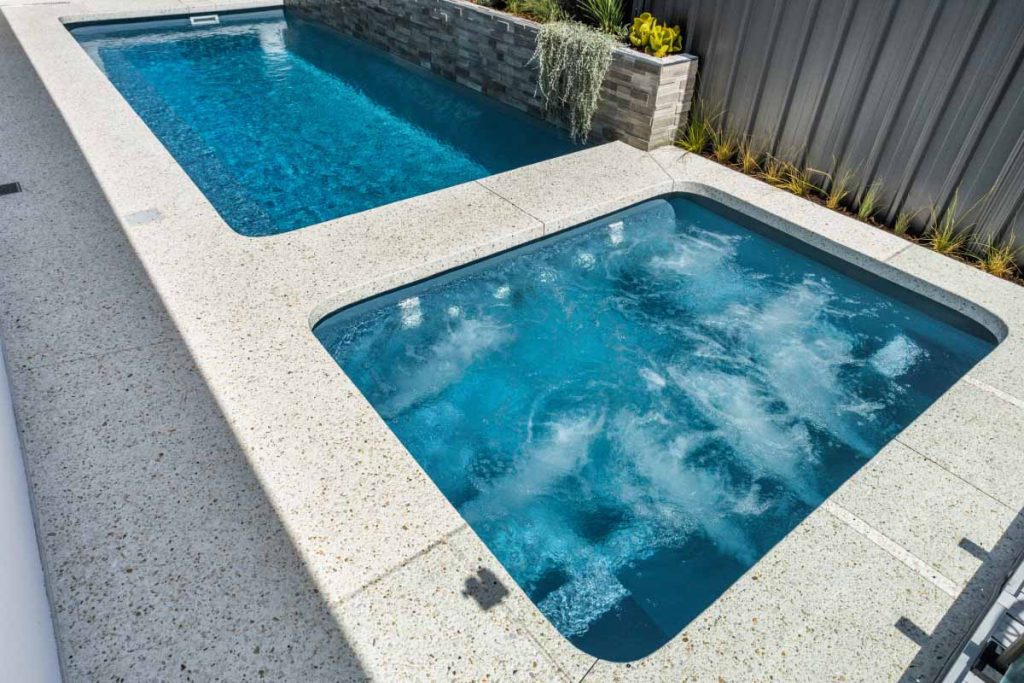
Jets are one of the biggest reasons people choose a plunge pool over a standard swimming pool. Combined with warm water, well-placed jets can turn your plunge pool into a compact hydrotherapy zone for sore muscles, stiff joints or simple end-of-day relaxation.
Types of jets for a plunge pool
- Massage jets (spa-style): These jets focus water onto key areas such as the lower back, shoulders and calves. They’re perfect for loosening tight muscles after work, sport or gym sessions.
- Air jets: Air jets inject streams of air into the water to create a softer, more bubbly sensation. They’re less intense than strong water jets and give a classic “spa bath” feel.
- Swim or resistance jets: For people who want to exercise in a small space, resistance jets create a controllable current to swim or jog against while staying in one spot.
Positioning jets in a plunge pool
Because a plunge pool is compact, jet placement makes a big difference to comfort and performance.
- On bench seating: Jets along built-in seats give each person their own massage zone. You can target the mid-back, lower back or legs depending on where the jets are set into the wall.
- In corners and deeper zones: Corner jets can provide a stronger, more enveloping massage for people who like extra pressure.
- Opposite a swim jet: If you include a resistance jet, it’s usually positioned in the deeper section of the plunge pool so you have room to move against the current.
Comfort, noise and energy use
- Pumps and plumbing: More jets usually mean a more powerful pump and extra pipework. Your pool builder can size the system so it feels strong enough without being overly noisy or expensive to run.
- Adjustability: Many jet systems allow you to dial the pressure up or down, or turn individual jets on and off, so each person can choose their preferred level of massage.
- Combining with heating: Jets work best when your plunge pool water is pleasantly warm. If you know you’ll use jets often, it’s worth pairing them with a suitable heating system and a pool blanket so you’re not wasting energy.
With the right jet layout, a plunge pool can function as a compact spa, a gentle exercise pool and a family splash zone all in one – without needing the footprint of a traditional swimming pool.
How much does a plunge pool cost?
The overall expense of a plunge pool can vary significantly depending on numerous factors. Whether you decide to include added extras in your pool, whether you have good access to your backyard or not, the quality of the fibreglass pool you choose, the fencing and landscaping and which installation method you choose can all add to the price. Generally speaking, the starting price of an inground plunge pool is around $13,000. However, the best way to get an exact price is by contacting your local pool builder. Most offer free onsite quotes.
Benefits of a plunge pool
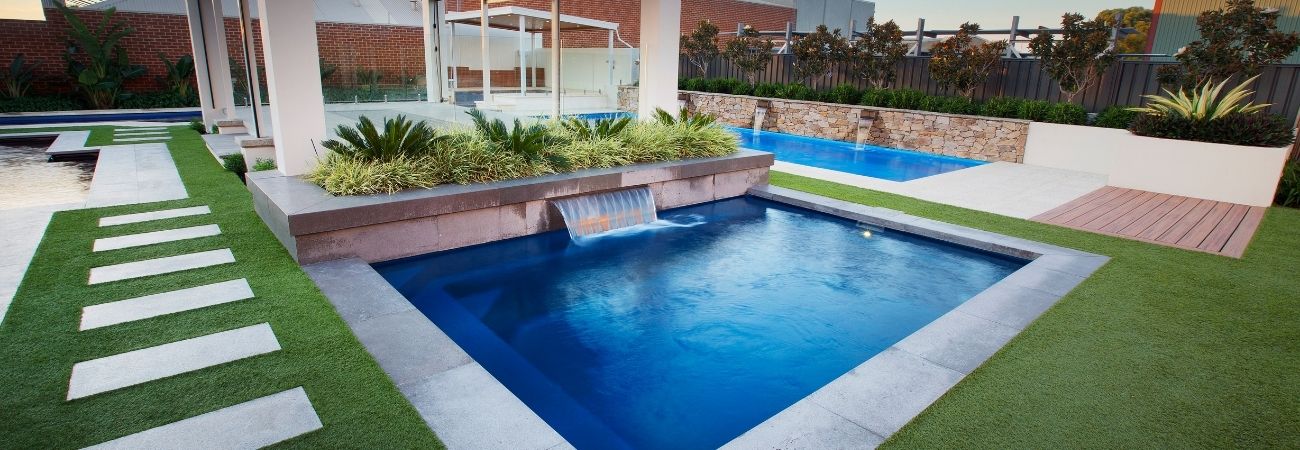
The great thing about plunge pools is they provide people with smaller backyards or limited space the opportunity to own a pool. They are a great option for those in built up residential areas and those with little kids who are gaining confidence in the water. As they are not large in size, children do not have far to swim to get the other side. The larger seating area makes an ideal resting spot too. A well-designed plunge pool makes a stunning statement piece in the backyard without needing a lot of room.
Due to their smaller size, they require less chemicals and maintenance to keep them clean. They are also much more environmentally friendly in comparison to larger pools. The use less water, less energy and heat far more effectively. If you are looking for an environmentally friendly swimming pool option, a plunge pool could be the perfect choice.
For many, the biggest incentive for purchasing a pool is the health and wellness benefits they offer. Plunge pools give you a place to unwind, de-stress and relax. All of which are known to have positive impacts on our metal and physical wellbeing.
Is a plunge pool a good choice for me?
Plunge pools are ideal for people who:
• Want to heat their pool for the least money
• Want to reduce the cost associated with running a pool
• Want a pool with minimal upkeep required
• Have a small backyard but still want a pool for their home
• Want to enhance their health and wellbeing
• Want a pool that is gentler on the environment
If you’re considering a plunge pool for a smaller backyard, Factory Pools Perth offers a range of small fibreglass pool designs that provide many of the same space-saving benefits. Explore our Plunge Pools Perth page to compare suitable options for your backyard.
See Our Most Popular Award Winning Pools
Looking For A New Pool?
Plunge Pool FAQs
Can a plunge pool be heated?
Yes. A plunge pool can be heated using solar, electric or gas systems – or a combination of these – and because the water volume is smaller than a full-size pool, it typically heats up faster and more economically.
What is the best way to heat a plunge pool?
There is no single “best” option, but many Perth homeowners choose solar heating for low running costs, then add either an electric heat pump or a gas heater as backup for cold or cloudy days.
Do plunge pools need a pool cover?
You don’t have to use a cover, but a pool blanket or cover will help keep your plunge pool warmer for longer, reduce evaporation and lower your overall heating costs.
Can you swim laps in a plunge pool?
Standard laps are difficult due to the compact size, but adding resistance jets turns a plunge pool into a small exercise pool where you can swim or jog against a current.
Is a plunge pool a good choice for small backyards?
Yes. Plunge pools are designed specifically for smaller or narrow spaces. They give you the benefits of a swimming pool – cooling off, relaxing, hydrotherapy – without taking over your entire backyard.