Fibreglass vs Concrete Pools: Why Perth’s Soil Makes the Difference
- Written By Factory Pools Perth
- Published Date: 26 August 2026
- 5 Min Read
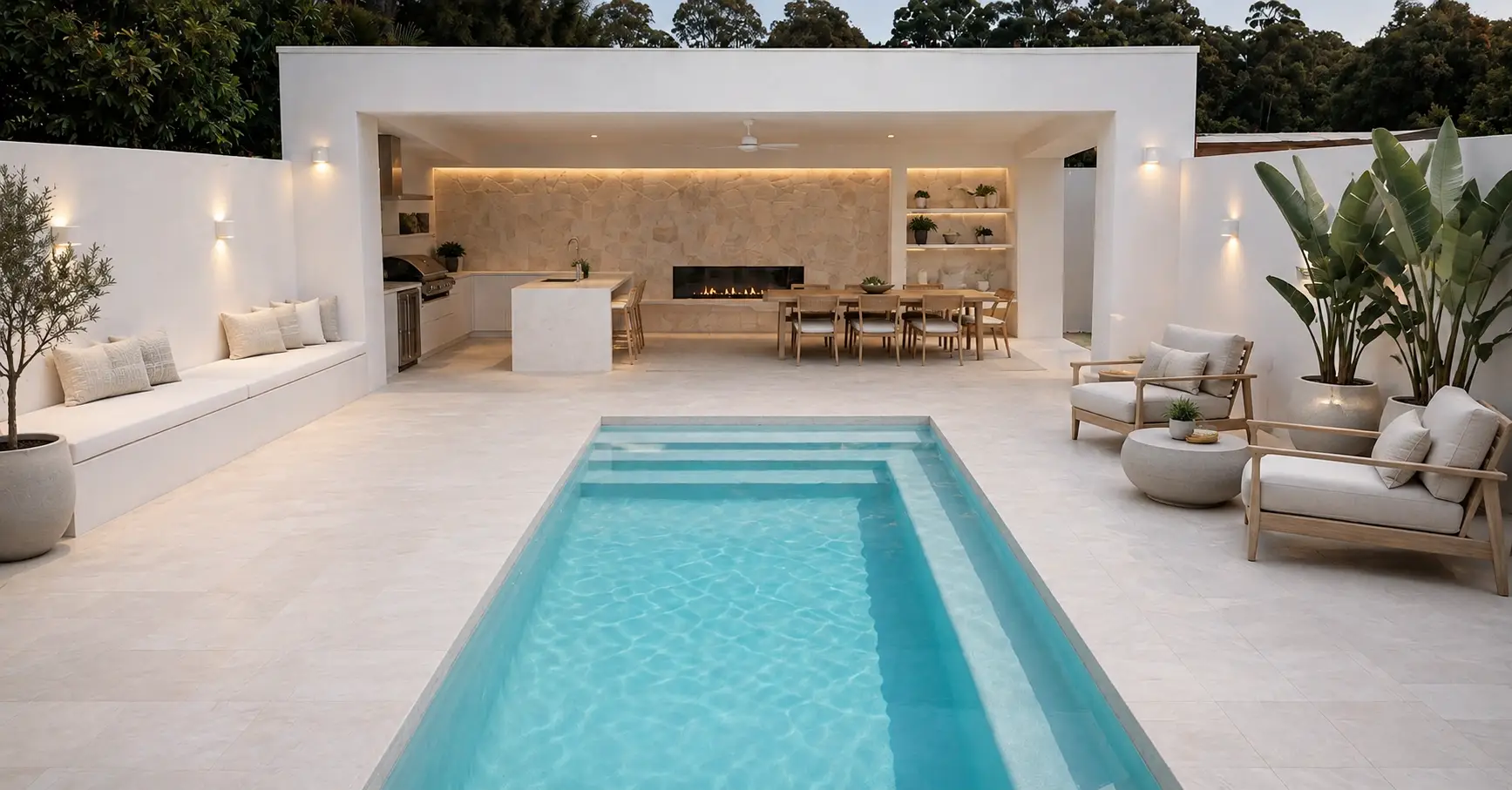
When you’re comparing fibreglass and concrete pools, most of the information you’ll find online is fairly generic – pros and cons that apply “everywhere.” But if you’re building in Perth, there’s one factor that genuinely changes the calculation: what’s happening underneath your pool, in the soil itself.
Here’s how fibreglass and concrete actually compare, and why ground conditions in WA tip the scales more than people realise.
The Quick Comparison
| Fibreglass | Concrete | |
|---|---|---|
| Installation time | Typically days, not weeks | Typically weeks to months |
| Surface finish | Smooth gelcoat, resists algae | Porous surface, more prone to algae growth |
| Flexibility | Flexes slightly with ground movement | Rigid – cracks rather than flexes |
| Maintenance | Generally lower ongoing chemical/cleaning needs | Generally higher, due to porous surface |
| Shape & design | Pre-manufactured ranges, proven designs | Fully custom shapes possible |
| Lifespan | Manufacturer warranties commonly cover decades | Long-lasting, but resurfacing typically needed periodically |
Here’s the part that’s easy to overlook: every pool, regardless of material, sits in the ground – and the ground moves. Not dramatically, not overnight, but soils expand and contract with moisture changes, settle slightly over time, and respond differently to seasonal wet/dry cycles. Perth’s sandy soils are generally well-draining and easier to work with than the reactive clay soils found in many other parts of Australia. But “easier” doesn’t mean “static” – sandy soils can still shift, particularly with changes in moisture content near the pool’s footprint, irrigation runoff, or nearby landscaping changes over the years.
This is where the structural difference between fibreglass and concrete really shows up: Concrete pools are rigid. They’re built to hold their shape, which is great – until the ground underneath them shifts in a way the structure wasn’t designed to accommodate. When that happens, the result is typically cracking, which can lead to leaks and, eventually, costly structural repairs.
Fibreglass pools have a degree of flex built into the material. The Kevlar Laminate structure unique to Factory Pools Perth designs can accommodate minor ground movement without cracking, which is part of why our fibreglass pools have a reputation for being more resilient to the kind of gradual soil shifts that occur over a pool’s lifetime – including in Perth’s sandy conditions.
What About Limestone?
Many Perth suburbs, particularly coastal and northern areas, have limestone close to the surface. This affects both pool types during excavation (limestone can be harder to excavate than pure sand, regardless of what you’re building), but it doesn’t meaningfully change the fibreglass-vs-concrete comparison once the pool is in. Both pool types need a properly prepared base regardless of what’s being excavated – the key difference remains how each structure behaves over time once it’s installed.
Installation Speed: A Genuine Perth Advantage
Because a fibreglass pool arrives as a pre-manufactured shell, the on-site installation timeline is dramatically shorter than a concrete build – which involves formwork, steel reinforcement, pouring, and curing time, often over many weeks. For homeowners trying to get a pool ready within a specific timeframe (say, ahead of summer), this difference alone is often decisive.
Maintenance: The Long Game
Concrete’s porous surface gives algae more to grip onto, which generally means more frequent brushing, more chemical use, and eventually, resurfacing or repainting to maintain the finish. Fibreglass’s smooth gelcoat surface is inherently more resistant to algae growth, which translates to less time spent on maintenance over the years.
All of our pools include our Advanced Pool Colour Technology an industry superior gelcoat designed to withstand Australia’s harsh UV and weather conditions. This provides extended resistance to the chlorine and acid found in pool chemicals and a durable, long-lasting finish backed with our Lifetime Interior Surface Guarantee.
So Which Should You Choose?
If your priorities are a faster installation, lower long-term maintenance, and a structure that’s well-suited to handle the kind of gradual ground movement common in Perth’s soils, fibreglass is generally the stronger choice for most residential backyards. Concrete remains the right call for highly custom or architecturally unique designs where shape constraints rule out pre-manufactured ranges, but for the vast majority of Perth homeowners, a fibreglass pool, backed with a comprehensive manufacturer warranty, offers a compelling combination of speed, durability, and lower upkeep.
Considering your options? Get in touch for a no-obligation chat about which pool type – and which range – suits your block.
Frequently Asked Questions
Is fibreglass or concrete better for Perth's sandy soil?
Fibreglass is generally better suited to Perth conditions. Its slight structural flex accommodates the gradual ground movement that can occur even in well-draining sandy soils, whereas concrete’s rigidity means it’s more prone to cracking if the ground beneath it shifts.
Does limestone affect whether I should choose fibreglass or concrete
Limestone affects excavation difficulty for both pool types similarly, but doesn’t change the underlying structural comparison between fibreglass and concrete once the pool is installed.
Which pool type is faster to install?
Fibreglass, by a significant margin. A pre-manufactured shell can typically be installed within days of arriving on-site, compared to the weeks-to-months timeline of a concrete build (formwork, reinforcement, pouring, and curing).
Is fibreglass more expensive than concrete
Generally, fibreglass has a lower total installed cost for most standard residential pool sizes, partly due to the significantly reduced labour and time on-site.