
How Do You Clean A Fibreglass Pool?
Purchasing a fibreglass swimming pool will most likely be the biggest investment you make for your home, that it is why it is important to ensure you know how to maintain and clean your pool the correct way. Generally speaking, fibreglass is easy to maintain, but there are a few things you need to understand so you can stay on track with your cleaning schedule, this will keep your fibreglass pool looking new for many years to come.
Key takeaways
- Stick to a simple weekly routine: skim debris, empty baskets, brush where needed, and vacuum the floor to prevent build-up.
- Balanced water chemistry protects your pool surface and equipment and helps prevent staining, scale, cloudy water and irritation.
- Run your pump/filter daily (often 6–8+ hours) and keep filters/baskets clean so your system can do its job properly.
- Treat stains early and use fibreglass-safe tools/products—avoid stiff brushes and harsh chemicals that can damage the surface.
Why cleaning your pool matters
Cleaning your pool is extremely important to increase its lifespan and protect the health of the people using it. An unclean pool filled with leaves, dust, debris, algae, and oils can become a breeding ground for bacteria and cause water quality issues. With a consistent routine and the right tools, keeping a fibreglass pool clean is very manageable year-round.
Always clean debris weekly
Cleaning debris such as dirt, leaves and bugs from your pool regularly will ensure your fibreglass pool is kept clean and hygienic at all times. Even if your pool isn’t located near trees or leafy gardens, it is still important to stay on top of removing debris otherwise your pool water can become dirty and unclean.
Skimming (quick and low-cost)
To remove debris from your pool, use a skimming net and a telescopic pole (available from most pool shops). A telescopic pole helps you reach anywhere around your pool. If your pool is near big trees, trimming branches can also help reduce leaf drop into the water.
Vacuuming (for settled debris)
Pool vacuums can be used to clean fallen leaves, algae deposits and debris from the pool floor. They work similarly to indoor vacuums and are a quick way to keep the bottom of the pool clean. If you use a suction cleaner and it’s not performing as expected, see: troubleshooting suction pool cleaners.
Clean the skimmer basket
The skimmer basket collects dirt and debris before it reaches your filtration system. Empty and rinse it at least once a week (more often during windy weather, storms, or heavy pool use) so your circulation stays strong.
Understanding chemical balance and water chemistry
It is highly important to understand that the water chemistry in your fibreglass pool must be balanced. If chemicals aren’t balanced correctly, the water can become corrosive or lead to scale and calcium build-up. Balanced chemistry helps prolong the lifespan of your fibreglass pool and pool equipment, and keeps your water comfortable to swim in.
To help keep your pool in top condition, monitor these key readings regularly:
- pH: pH measures acidity/alkalinity. Low pH (acidic) can corrode pool surfaces and equipment. High pH (alkaline) can lead to scale and calcium build-up. Aim for 7.4–7.6.
- Calcium hardness: Too much calcium can make water cloudy and contribute to scale/staining. A common target range is 200–400 ppm.
- Total alkalinity: Helps stabilise pH and reduce corrosion/scale risk. A general target range is 60–200 ppm.
Also keep an eye on chlorine/sanitiser levels and metal hardness, as these can contribute to staining and water quality problems if they drift out of range.
Pool filters and pump
Fibreglass pools need a good quality filter and pump to keep the water clean and hygienic. Run your pump daily—typically 6–8+ hours (and longer during heavy use or peak summer). We often find the best time to run it is after you’ve finished swimming for the day, so debris and contaminants are filtered out.
Backwashing and filter cleaning
Remember to regularly clean debris collected in filters to prevent clogging. Backwashing can be done around once a month (where applicable) to help clear lines and remove built-up waste. Always follow your filter manufacturer’s guidance for the correct method and frequency.
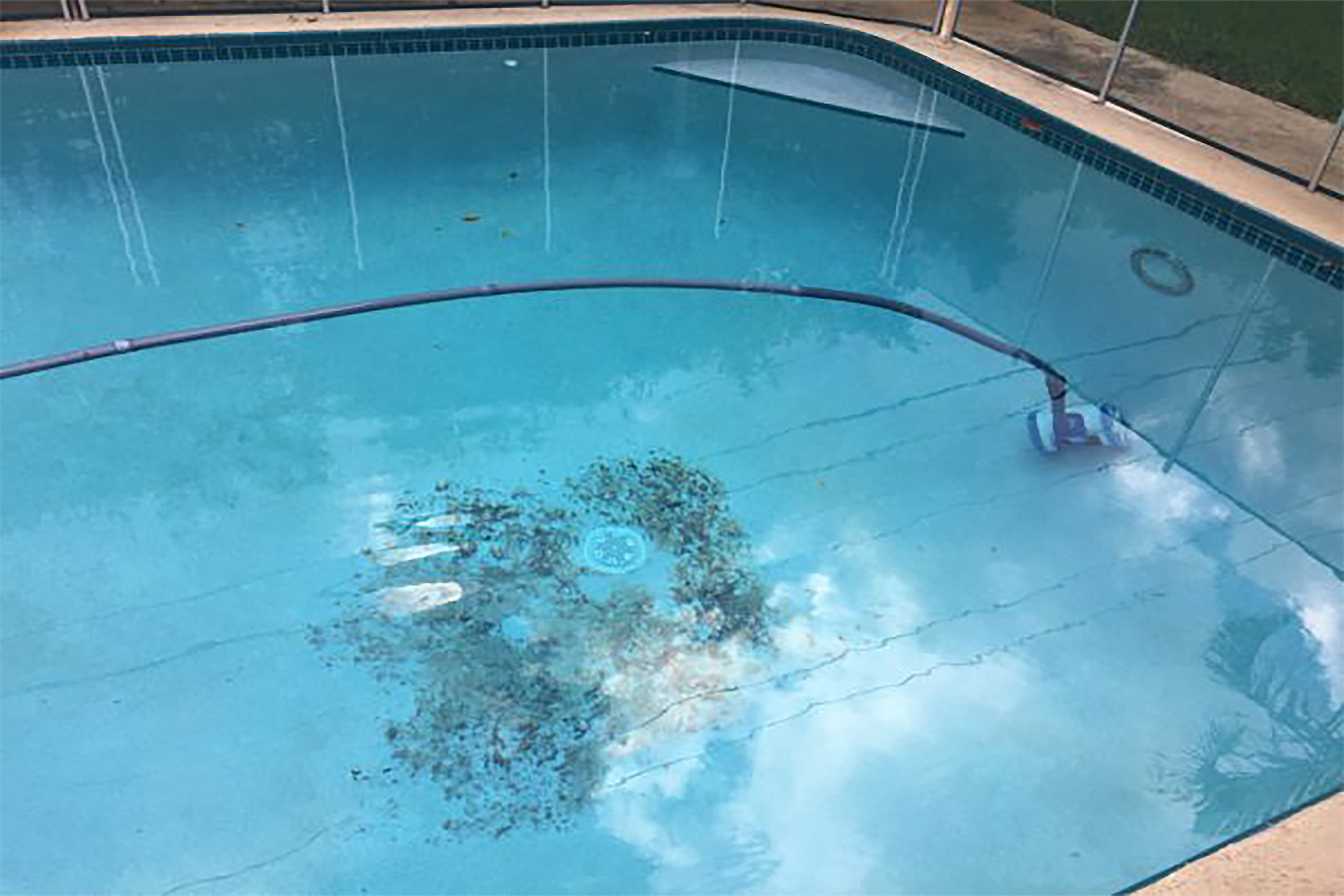
What Causes Stains On A Fibreglass Pool?
There are several reasons why you might find stains in your swimming pool. Often, staining is caused by metals in the water, but chemistry imbalance can also be a major contributor.
- White/chalky deposits: commonly linked to calcium scale and water balance issues.
- Yellowish-brown staining: can be related to salt and water chemistry problems.
- Black spots: may be due to excess cobalt oxide, which can damage the gel coat over time if left unchecked.
- Maroon/rust tones: can be linked to iron.
- Turquoise/blue-green tones: can be linked to copper.
- Yellow organic staining: can be caused by pollen and algae.
How to remove stains (start early)
The longer a stain sits and darkens, the harder it becomes to remove. Tackle stains as soon as you notice them:
- Small rust stains: rub with a vitamin C tablet and a soft bristle/nylon brush.
- Organic stains (pollen/algae): often respond to prompt cleaning; stubborn cases may require additional treatment.
- Calcium scale/deposits: may require a dedicated scaling treatment if brushing doesn’t shift it.
If you cannot remove stains, or you’re having trouble keeping them under control, contact your local pool shop for product guidance and testing support.
Cleaning an empty pool (only when necessary)
An empty pool is easier to access for cleaning the floor and sides, but completely draining a pool can be risky and should only be done when there’s a major build-up of debris or the situation genuinely requires it. If you’re unsure, get professional advice before draining.
Acid washing
Acid washing can be done using ascorbic acid. After washing, adjust the chemicals and pH level of your pool before using it again.
Use fibreglass-safe products and tools
Cleaning products with harsh chemicals can damage your fibreglass pool. Use products designed specifically for fibreglass pools, and avoid stiff-bristled brushes that can damage the surface. Nylon/soft-bristle brushes and non-abrasive methods are typically the safest approach.
A pool cover is a fantastic investment
Whether you use your pool a lot or a little, it still needs maintenance. One of the easiest ways to reduce debris, contamination and cleaning time is by using a pool cover. If you’re looking at cover options, see: top solar pool covers and do I really need a pool cover?.
Helpful tips to maintain and clean your pool
- As soon as you see a stain, clean it—the longer it sits, the harder it is to remove.
- Run filters/pump for at least 6–8+ hours each day.
- Regularly check pH, alkalinity, calcium hardness and sanitiser levels.
- Empty and rinse skimmer/pump baskets regularly.
- Use a pool vacuum to remove dirt from the bottom.
- Use a pool cover when not in use to reduce debris and save cleaning time.
- If your pool continues to stain or you can’t remove stubborn marks, contact your local pool shop for advice.
Want help with pool care or planning a new pool?
If you are lucky enough to own a fibreglass swimming pool, staying on top of a simple cleaning and maintenance schedule will keep it sparkling for years and help protect your equipment. Factory Pools Perth have been transforming homeowners’ backyards for decades and we’re always happy to help with questions about ongoing care and maintenance.
If you’d like advice or you’re considering a new pool, reach out any time via our fast free quote form.
Extra resource: Here’s our Complete Pool Maintenance Checklist!
Frequently Asked Questions
How often should a fibreglass pool be cleaned?
At minimum, skim debris and empty baskets weekly, vacuum as needed, and keep your pump/filter running daily. In windy weather or heavy-use periods, you may need to clean more often.
What tools do you need to clean a fibreglass pool?
A skimming net, telescopic pole, pool vacuum (manual or automated), and a soft/nylon brush are the basics. Fibreglass-safe cleaning products help avoid damage to the surface.
How long should I run my pool pump each day?
A common guideline is around 6–8+ hours daily, with longer run-times during peak summer or heavier pool use. Consistent circulation supports filtration and chemical balance.
What causes stains in a fibreglass pool?
Stains are often caused by metals in the water (like iron or copper), calcium scale from imbalanced chemistry, or organic build-up (like pollen and algae). Keeping chemistry balanced and treating stains early helps prevent long-term marking.
Can I use a stiff brush or harsh chemicals on fibreglass?
It’s best not to. Stiff-bristled brushes and harsh chemicals can damage the fibreglass surface. Use soft/nylon brushes and products designed for fibreglass pools.
Should I drain my fibreglass pool to clean it?
Usually no—full draining is typically only for situations with major debris build-up or when specifically required. Draining can be risky, so it’s best to get professional advice before doing it.